
Urgency line, directly under the sub headline:
Roof leaking right now? Call us. Do not use the form.
An emergency roof call is a different job to a normal repair, and the priority order matters.
The first job is stopping more water entering the building. That usually means temporary make safe work, tarping the affected section, clearing a blocked valley or gutter, or securing tiles and ridge caps that have lifted. It is not a permanent fix and it is not meant to be. It is what stops your ceiling, insulation and framing taking further damage while conditions are still bad.
The permanent repair comes after, once the weather has cleared and we can see the whole roof properly. Trying to do a full repair on a wet roof in poor conditions produces work that fails, and it puts people at unnecessary risk.
We photograph everything at both stages, which matters if you are claiming on insurance.
Aussie Durable Roof Restorations handles emergency roof work across Brisbane and the surrounding suburbs.
Water coming through the ceiling, running down a wall, or pooling in the roof cavity. We locate where it is entering and stop it.
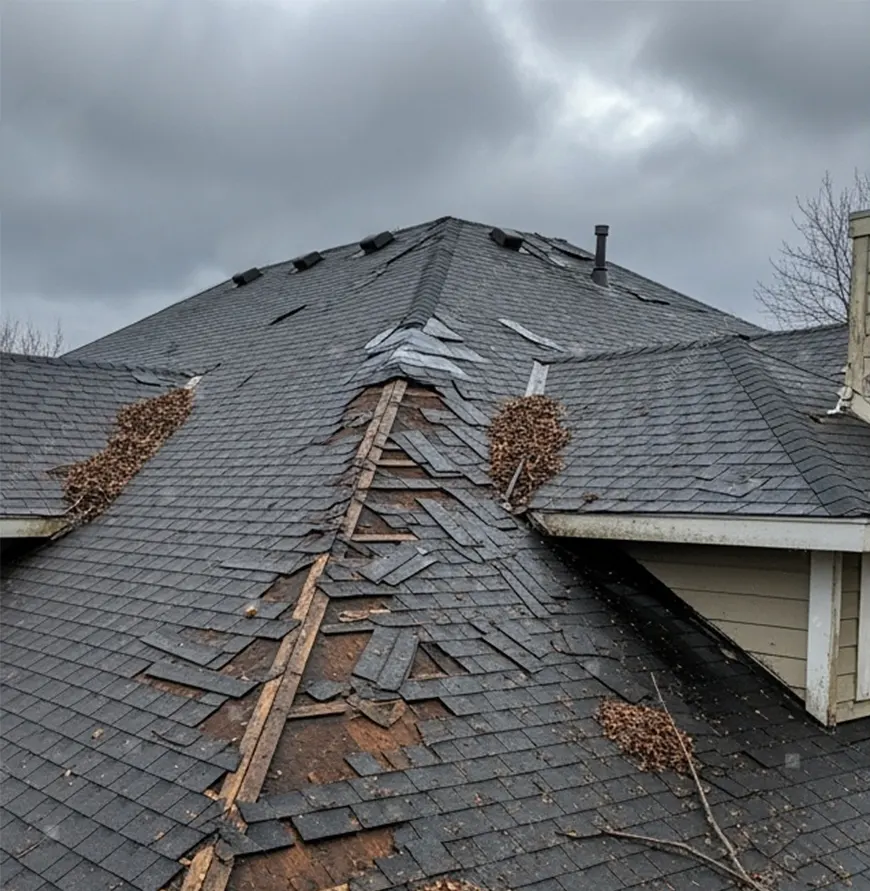
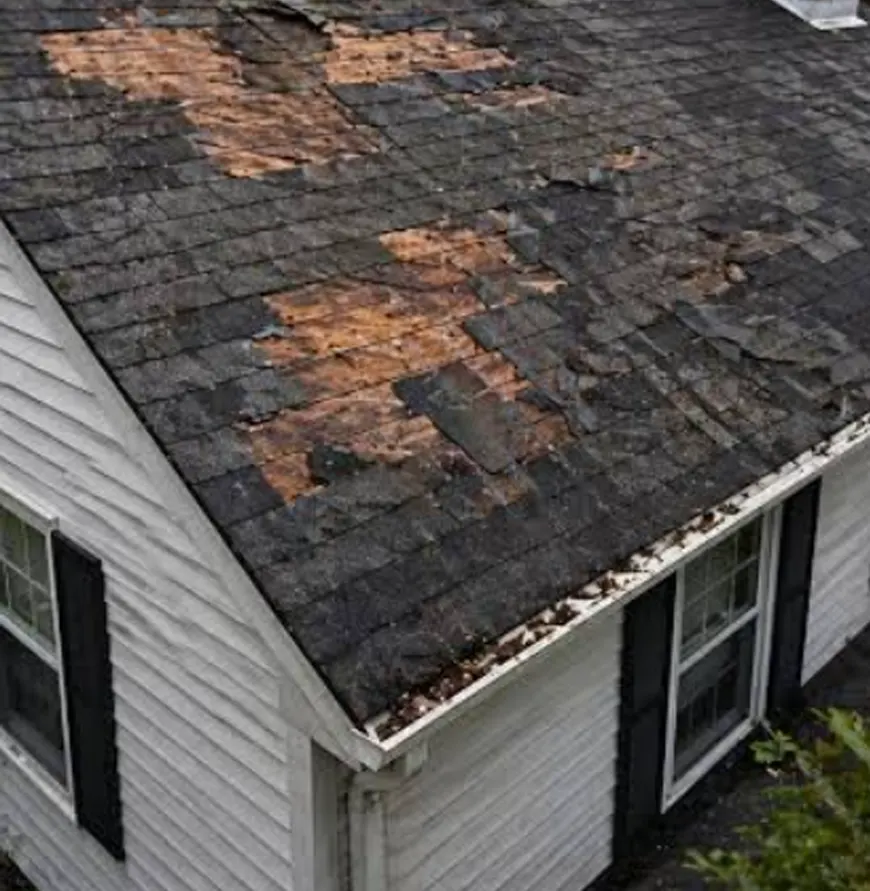
Tiles cracked or smashed, ridge caps displaced, sheets lifted, valleys blocked with debris. Common across Brisbane through the September to March storm season.
Temporary covering over the damaged section so the building stops taking water while we wait for conditions to allow a permanent repair.
Tiles blown out of position or off the roof entirely, leaving an open section. We secure the area and replace what is missing.
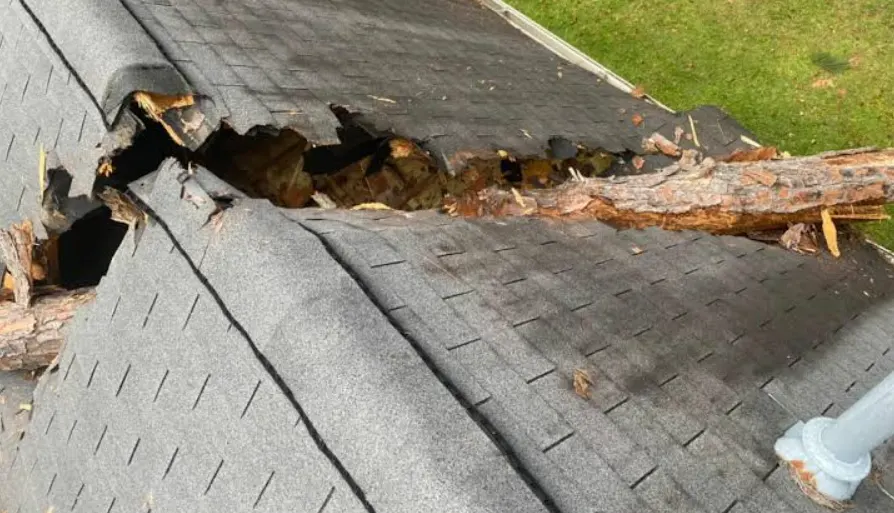
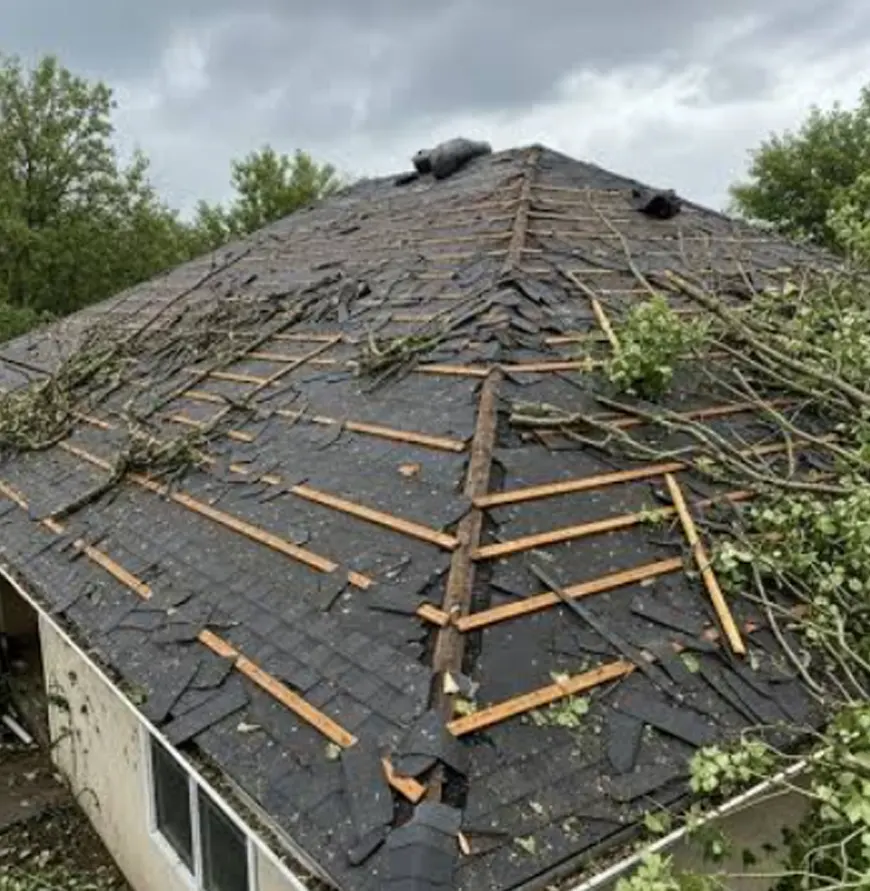
Impact damage from branches, which is one of the most common causes of sudden roof failure in Brisbane's leafier suburbs.
Valleys and gutters choked with debris during heavy rain cause water to back up under the tiles. Clearing them is often the fastest fix there is.
Some roof problems can wait for a normal booking. These cannot.
✔ Water actively dripping or running through a ceiling
✔ A ceiling that is sagging, bulging or discoloured in a spreading patch
✔ Water running down an internal wall
✔ Visible sky through the roof space
✔ Tiles or sheets missing from the roof after a storm
✔ Ridge caps displaced or hanging loose
✔ A tree branch resting on or through the roof
✔ Water near light fittings, ceiling fans or electrical outlets
✔ Water pooling in the roof cavity on top of the ceiling plaster
✔ Any leak that is getting visibly worse rather than staying steady
The one to act on immediately is a sagging or bulging ceiling. That means water is pooling above the plaster, and a saturated ceiling can come down without warning. Keep people out of that room and call straight away.
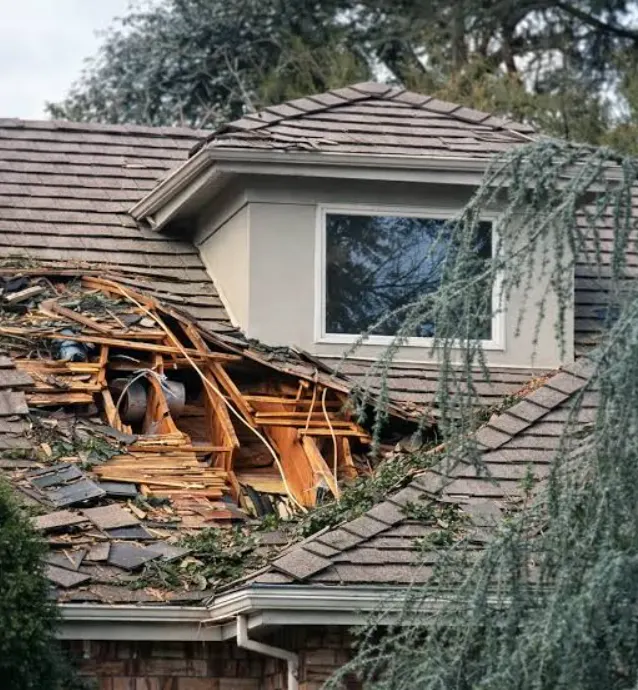
The practical consequence is that after any declared storm event, every roofing company in Brisbane is at capacity simultaneously, and genuine response times blow out for everyone. This is also exactly when unlicensed operators appear door to door offering immediate cash repairs, because they know demand has outstripped supply.
There is a second Brisbane specific factor. Many homes built before the 1990s have no sarking, the membrane layer beneath the tiles. On those roofs there is no second barrier at all, so a single displaced tile becomes an active internal leak within minutes of rain starting rather than over days. It is why a storm that causes cosmetic damage in a newer suburb causes ceiling damage in an older one.
The takeaway is a practical one. Small roof problems are cheap to fix in the dry months and become emergencies in the wet ones. If something on your roof is marginal in August, deal with it in August.
Worth understanding, particularly if insurance is involved, because they get quoted and claimed separately.
Make safe is what happens first:
Temporary work that stops further damage. Tarping the affected section, securing loose tiles and ridge caps, clearing blocked valleys, covering an open area. It is done in whatever conditions exist at the time, it is not pretty, and it is not meant to last. Its entire purpose is to stop the building taking more water while you wait.
The permanent repair happens after:
Once conditions allow and the roof can be properly assessed in daylight and in the dry. Tiles matched and replaced, ridge caps rebedded and repointed, valleys replaced, flashings redone. This is the work that actually resolves the problem.
Most home insurance policies treat emergency make safe work as a separate and usually covered item, often without waiting for the full claim to be assessed. If you are claiming, tell your insurer make safe work has been carried out and keep the photographs and the invoice.
We do both, we document both, and we will tell you honestly which stage your roof is at.
Practical steps that limit the damage. Please read the last one carefully.
Move what you can out of the way. Furniture, electronics, rugs and anything valuable moved clear of the affected area or covered with plastic.
Contain the water. Buckets or containers under active drips, towels to stop it spreading across floors. Empty them before they overflow.
Turn off power to the affected area. If water is anywhere near light fittings, ceiling fans or power points, switch that circuit off at the switchboard. Do not touch a wet fitting or switch.
If the ceiling is bulging, stay out of the room. A saturated plasterboard ceiling can collapse without warning. Keep children and pets out and close the door.
Photograph everything before you clean up. Every angle, inside and out, with timestamps. Insurers ask for this and it is much harder to reconstruct later.
Clear ground level debris only. If a downpipe outlet or ground drain is blocked and you can reach it safely from the ground, clearing it can relieve a lot of water pressure.
Do not go up on the roof. This is the important one. A wet tile roof is extremely slippery, damaged tiles will not hold your weight, and storm conditions make it worse again. Every year people are seriously injured in Queensland doing exactly this during and after storms. Whatever is up there can wait for someone with harnesses and height safety equipment. Do not climb up to look, do not climb up to put a tarp on, and do not let a neighbour do it for you.
If we cannot get to you for a few hours, we say so rather than leaving you waiting on a promise. We will also tell you what to do in the meantime.
Fully QBCC licensed and insured, working to Queensland height safety requirements. (QBCC Licence No. [INSERT]) Worth checking on anyone who knocks on your door after a storm.
Photographs and a written report from the moment we arrive, which is what makes a claim straightforward instead of a fight.
Chermside, Aspley, Bracken Ridge, Everton Park, Stafford, Nundah, Clayfield, Ashgrove, The Gap, Ferny Grove
Mount Gravatt, Sunnybank, Carindale, Holland Park, Coorparoo, Camp Hill, Annerley, Salisbury
Indooroopilly, Kenmore, Chapel Hill, Toowong, Jindalee, Centenary Suburbs
Wynnum, Manly, Cleveland, Capalaba, Victoria Point, Thornlands
North Lakes, Redcliffe, Caboolture, Strathpine, Narangba, Burpengary
Springfield, Springwood, Shailer Park, Browns Plains, Booval, Ripley
The Gold Coast on request. If your suburb is not listed, call us anyway. We most likely cover it.